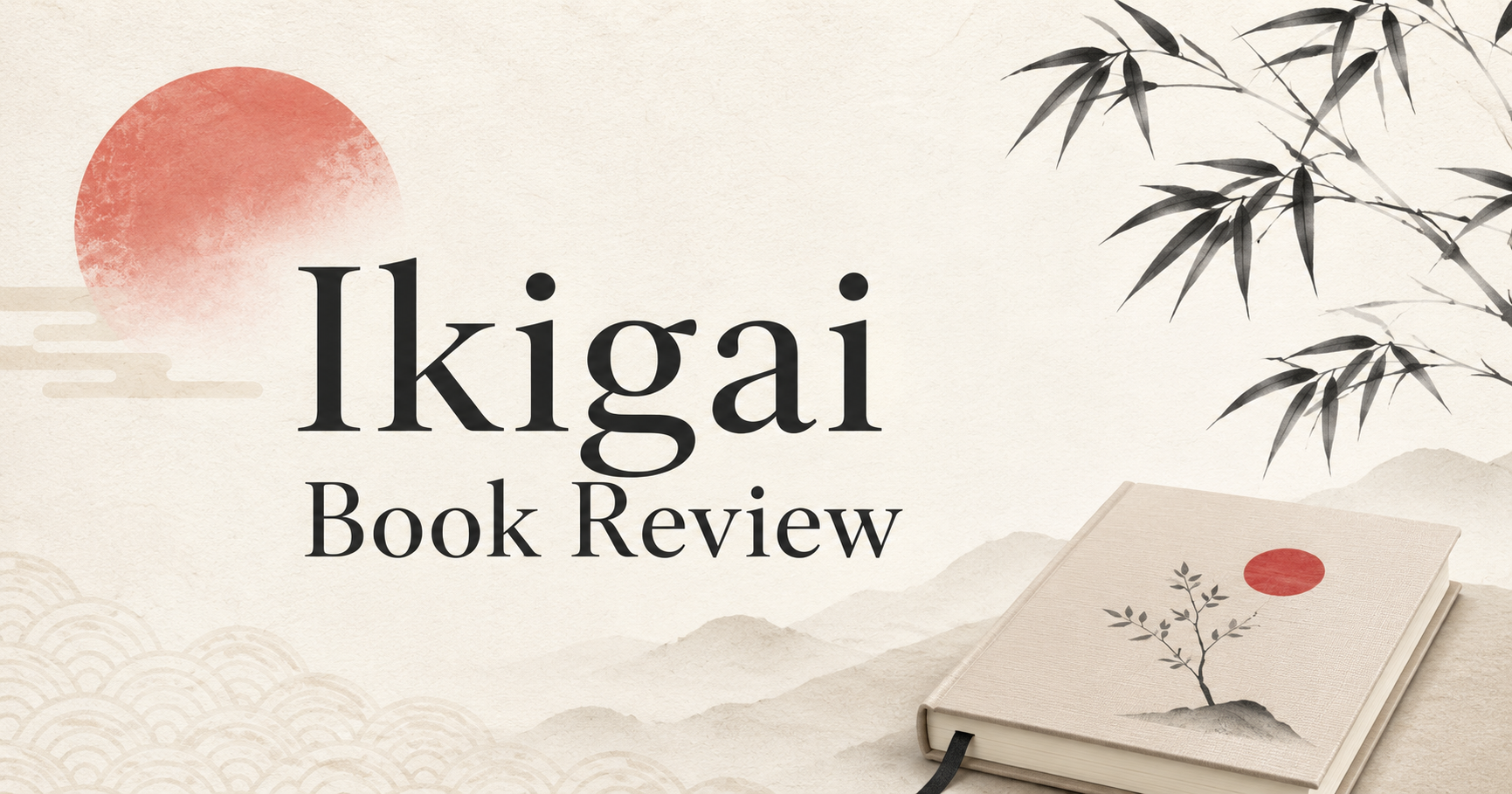
Many people feel busy, stressed, and confused about the real purpose of life. Some people are successful but not peaceful. Some people are working hard but do not feel deeply satisfied. Ikigai by Héctor García and Francesc Miralles is a simple and thoughtful book that explores the Japanese idea of finding meaning, purpose, and joy in everyday life.
This review will help you understand what the book is about, who should read it, key lessons, pros and cons, and whether Ikigai is useful for Indian readers.
Quick Verdict
Ikigai is a calm, beginner-friendly, and meaningful book for readers who want to understand life purpose, simplicity, health, happiness, and balanced living. It is not a heavy motivational book. Instead, it encourages readers to slow down, live meaningfully, and find joy in small daily actions.
| Point | Verdict |
|---|---|
| Best for | Readers interested in purpose, peace, simplicity, and meaningful living |
| Not ideal for | Readers looking for aggressive motivation or business success formulas |
| Difficulty level | Easy |
| Main theme | Purpose, longevity, happiness, and mindful living |
| Indian reader relevance | High |
| Overall rating | 4/5 |
Book Details
| Detail | Information |
|---|---|
| Book Name | Ikigai |
| Authors | Héctor García and Francesc Miralles |
| Category | Self-help, spirituality, personal growth, lifestyle |
| Best for | Beginners and readers seeking meaning |
| Reading style | Simple, peaceful, reflective, easy to read |
What Is Ikigai About?
The word Ikigai roughly means “a reason for being” or “a reason to wake up in the morning.” The book explores how people can live longer, happier, and more meaningful lives by finding purpose and living with balance.
The book discusses ideas from Japanese culture, especially the lifestyle of people from Okinawa, where many people are known for long and active lives.
In simple words, this book is about:
- Finding purpose in daily life
- Living with simplicity
- Staying active
- Building meaningful relationships
- Eating and living mindfully
- Reducing stress
- Doing work that gives joy and meaning
- Creating balance between passion, mission, profession, and vocation
Why This Book Is Popular
The biggest reason Ikigai is popular is its simplicity. It does not use difficult language or complicated philosophy. The book gives a peaceful message that many modern readers need:
Life is not only about achievement. It is also about purpose, health, relationships, simplicity, and daily joy.
For Indian readers, this message is very relevant because many people are under pressure from career, family responsibilities, financial goals, social comparison, and lifestyle stress.
Who Should Read Ikigai?
This book is suitable for:
- Beginners who want an easy self-help book
- Readers looking for life purpose
- Working professionals feeling stressed or directionless
- Students confused about career and meaning
- Spiritual readers interested in simple living
- Parents who want a peaceful and balanced mindset
- Readers who enjoy calm, thoughtful books
Who Should Avoid This Book?
This book may not be suitable for:
- Readers looking for strong motivational energy
- People who want a step-by-step career planning guide
- Readers expecting deep spiritual philosophy
- People looking for business, finance, or productivity techniques
- Readers who prefer highly practical worksheets and exercises
If you want a practical habits book, start with Atomic Habits. If you want money mindset, read The Psychology of Money. If you want calm life-purpose reflection, Ikigai is a good choice.
My Personal Reading Experience
I found Ikigai to be a peaceful and easy-to-read book. It does not push the reader with heavy motivation. Instead, it gently encourages us to think about what gives meaning to our life.
One thing I liked about the book is that it connects purpose with daily living. Purpose is not shown as something very big or dramatic. It can also be found in simple routines, useful work, relationships, health, and small joys.
For Indian readers, this idea is meaningful because many people are busy chasing goals but forget to ask whether their daily life feels peaceful, healthy, and meaningful.
Key Lessons from Ikigai
1. Everyone Needs a Reason to Wake Up
The book explains that people live better when they have a sense of purpose. This purpose does not always need to be grand or famous. It can be simple and personal.
Your reason to wake up may be:
- Taking care of your family
- Teaching students
- Building a business
- Helping others
- Creating something useful
- Learning every day
- Living peacefully
The key idea is that life feels better when your daily actions connect with meaning.
2. Stay Active, Do Not Retire Mentally
One important lesson from the book is to stay active. People who remain physically, mentally, and socially active often experience more energy and meaning.
This does not mean you must always work under pressure. It means you should continue doing useful and meaningful activities.
Examples:
- Reading
- Walking
- Gardening
- Teaching
- Writing
- Helping others
- Learning a skill
- Spending time with family
3. Simplicity Can Bring Peace
Modern life often creates stress through comparison, overthinking, unnecessary desires, and constant distractions. Ikigai encourages a simpler lifestyle.
A simple life does not mean a poor life. It means living with clarity, balance, and less unnecessary pressure.
For Indian readers, this is practical because many people face social pressure related to salary, house, car, lifestyle, children’s education, and family expectations.
4. Relationships Matter
The book highlights the value of community and relationships. Human connection plays an important role in happiness and long life.
In Indian culture, family and community are already important, but modern life sometimes makes people isolated or emotionally disconnected.
This lesson reminds us to maintain meaningful relationships, not just digital connections.
5. Eat and Live Mindfully
The book also discusses lifestyle habits such as eating moderately, staying physically active, and living with awareness.
The idea is not about strict dieting. It is about respecting the body and avoiding excess.
Simple applications:
- Eat slowly
- Avoid overeating
- Walk regularly
- Stay active
- Sleep properly
- Reduce stress
- Spend less time on unnecessary screens
6. Find Flow in Your Work
Flow means becoming deeply involved in an activity that gives focus and satisfaction. The book explains that people feel happier when they do meaningful work with attention.
Examples of flow:
- Writing
- Designing
- Teaching
- Coding
- Reading
- Cooking
- Painting
- Gardening
- Playing music
When you find activities that give you flow, your life feels more meaningful.
Practical Applications for Indian Readers
Here are some simple ways to apply the ideas from Ikigai:
For Students
- Explore subjects that genuinely interest you
- Avoid comparing your journey with others
- Build a daily learning routine
- Spend time on hobbies, not only exams
- Think about what kind of work gives you meaning
For Working Professionals
- Find purpose beyond salary
- Build a healthier morning and evening routine
- Reduce stress through walking, reading, or meditation
- Maintain meaningful relationships
- Keep learning skills that excite you
For Business Owners
- Build a business that solves real problems
- Avoid working only for money
- Create daily routines for health and clarity
- Find joy in serving customers
- Stay connected with your long-term mission
For Parents
- Spend meaningful time with children
- Teach children simple living and gratitude
- Create family reading or discussion time
- Reduce unnecessary comparison with other families
- Build peaceful routines at home
For Personal Growth Readers
- Write down what gives you energy
- Identify activities where you lose track of time
- Reduce unnecessary distractions
- Create a simple lifestyle
- Connect your daily work with a larger purpose
Pros and Cons
Pros
- Easy to read
- Calm and peaceful writing style
- Good for beginners
- Useful for readers seeking meaning
- Relevant for stressed professionals and students
- Encourages simple and balanced living
- Can be read quickly
Cons
- Not very detailed or deeply analytical
- Some readers may find it too simple
- Not a step-by-step productivity book
- Does not give strong career or financial advice
- Readers expecting advanced philosophy may feel it lacks depth
Rating Breakdown
| Criteria | Rating |
|---|---|
| Practical value | 4/5 |
| Beginner friendliness | 4.5/5 |
| Writing style | 4/5 |
| Depth of ideas | 3.5/5 |
| Indian reader relevance | 4/5 |
| Re-read value | 4/5 |
Ikigai vs Atomic Habits
| Point | Ikigai | Atomic Habits |
|---|---|---|
| Main focus | Purpose and meaningful living | Habits and daily systems |
| Difficulty | Easy | Easy |
| Style | Calm and reflective | Practical and action-oriented |
| Best for | Life purpose and peace | Discipline and habit-building |
| Indian reader relevance | High | Very high |
Read Ikigai if you want peace, meaning, and life balance.
Read Atomic Habits if you want practical methods to build better daily habits.
Similar Books You May Like
If you like Ikigai, you may also like:
- The Alchemist by Paulo Coelho
- Man’s Search for Meaning by Viktor E. Frankl
- The Monk Who Sold His Ferrari by Robin Sharma
- The Art of Happiness by Dalai Lama and Howard Cutler
- Atomic Habits by James Clear
- The Power of Your Subconscious Mind by Joseph Murphy
Where to Buy
You can check the latest price and available formats online.
After this website is approved for an affiliate program, this section can include affiliate links.
Disclosure: Some links on this website may be affiliate links. If you purchase through those links, we may earn a small commission at no extra cost to you.
Final Verdict
Ikigai is a simple, peaceful, and meaningful book for readers who want to think about life purpose, balance, health, happiness, and everyday joy.
It is not a highly practical productivity book or a deep philosophical text. But it is a good beginner-friendly book for readers who want a calm introduction to purposeful living.
For Indian readers, Ikigai is useful because it encourages a balanced life in a culture where many people are under pressure from career, family, money, and social expectations.
Final Recommendation
Read Ikigai if you want a simple and peaceful book about purpose, balance, and meaningful living.
Skip it if you want direct productivity strategies, financial advice, or strong motivational content.